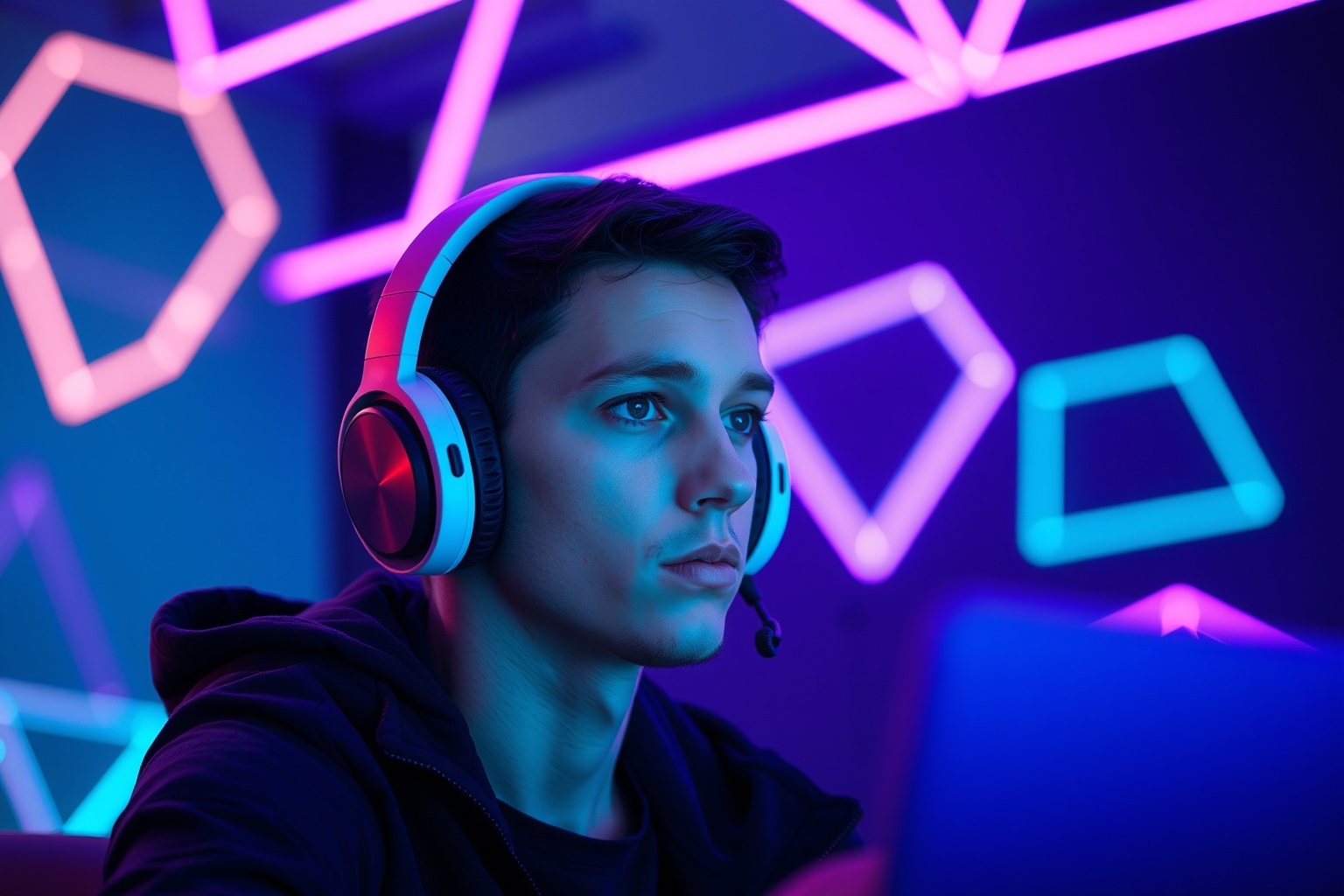
From Console Classics to Cloud Competitions: A Deep Dive into Modern Gaming
Exploring how gaming has evolved from single-player quests to vibrant esports ecosystems, with reviews shaping our choices and communities driving innovation.

Evolution of the Gaming Landscape and Player Motivation
Gaming has transformed from simple pixel adventures into expansive worlds that blend narrative depth with emergent systems. Players today chase meaningful progression, whether through a sprawling RPG, a competitive shooter, or a strategy title with intricate macro-management. This shift is driven by developers who design layered rewards, accessible entry points, and social hooks that keep friends teaming up for cooperative quests or rival showdowns, fueling sustained engagement. For many, gaming is now a primary source of storytelling, experimentation, and personal challenge, rather than a solitary pastime. jemputhoki online demonstrates how online platforms amplify these dynamics by connecting gamers across regions and time zones, inviting collaborative play and shared moments of triumph.
In this evolving ecosystem, video games function as cultural artifacts with measurable impact on players’ routines and communities. Streamlined tutorials ease newcomers into complex systems, while veteran players appreciate nuanced mechanics, hidden optimizations, and meta-shifts that reshape competitive viability. The result is a gaming culture that values both accessibility and depth, inviting casual play, practice regimes, and long-term investment—from collecting rare skins to engineering strategic deck lists in competitive card games or building advanced bases in sandbox worlds.
Technological Trends Powering Modern Gameplay
Advances in hardware, engines, and connectivity have lowered barriers to entry while expanding the fidelity of on-screen worlds. High-refresh-rate displays reveal micro-movements in aim, spellcasting, and particle effects that heighten immersion, while ray tracing and shader development push lighting realism forward without sacrificing frame stability. Developers leverage cloud processing and streaming services to enable playing on modest devices, making gaming more inclusive for players without premium rigs, which in turn broadens the pool of esports talent and content creators who can compete and entertain at scale.
With the rise of cross-platform play, players can pick up a campaign on a console and continue on PC without losing progress, expanding their social circles and championing a broader skill ceiling. This technological convergence also supports robust game reviews and critical discourse, where observers weigh performance, accessibility, and sustainability. The result is a more dynamic feedback loop between creators and players, guiding patches, balance changes, and new seasons that keep communities engaged across multiple titles and genres.
Esports Growth: Strategy, Skill, and Spectatorship
Esports has matured into a professional ecosystem where teams, coaches, analysts, and commentators craft narratives around every major event. Players train with data-driven routines, studying opponent tendencies and optimizing maps or character picks to gain competitive edges. Spectators benefit from polished broadcasts, in-depth breakdowns, and interactive ecosystems that reward audience participation through predictions, chat engagement, and merch. The result is a sport-like culture that blends athletic discipline with strategic artistry, drawing massive live attendances and online viewership.
Leagues spanning first-person shooters, real-time strategy, and MOBAs showcase the diversity of competitive gaming. At the same time, grassroots communities continue to incubate rising stars who leverage content platforms to showcase practice regimens and game-informed analysis. This bottom-up energy reinforces the legitimacy of esports, while encouraging responsible coaching, mental preparation, and fat reduction of performance plateaus through routine refinement and healthy competition.
Game Design Principles: Accessibility, Depth, and Replayability
Designers now prioritize approachable onboarding that gently teaches core loops while unlocking advanced systems for veteran players. This balance ensures newcomers aren’t overwhelmed by complex mechanics yet still feel hunger for mastery. Depth emerges through branching narratives, customizable loadouts, and emergent gameplay possibilities, inviting players to experiment with multiple strategies. Replayability is sustained by dynamic worlds, seasonal content, and meaningful progression that remains visible across hundreds of hours of play, keeping experiences fresh without sacrificing stability.
Quality game reviews play a crucial role in setting expectations and guiding purchases. Reviewers weigh factors like pacing, world-building, technical performance, and accessibility options, offering concrete examples and benchmarks rather than vague praise. When done well, critiques help players identify titles that match their time and appetite for challenge, while informing developers about what resonates with diverse audiences, from casual fans to hardcore completionists.
Narrative and World-Building as Core Attractions
Storytelling in games has grown into a collaborative spectacle where player choice matters and moral ambiguity informs character arcs. Writers craft branching paths, memorable antagonists, and lore-rich settings that reward attentive exploration. World-building extends beyond dialogue to environmental storytelling, audio cues, and game-wide ecosystems that react to player decisions. This design philosophy invites players to invest emotionally in virtual lives as if they were real, deepening attachment and long-term engagement with the title.
In global releases, localization and cultural nuance become essential to preserving authenticity. Developers now couple cinematic sequences with tactile feedback, ensuring that humor, tragedy, and tension translate across languages while preserving tonal intent. The most successful narratives create a bridge between personal experience and universal themes, encouraging players to reflect on choices and consequences long after the credits roll.
Accessibility and Inclusion: Broadening Who Can Play
Accessibility features, such as adjustable difficulty, color-blind modes, subtitle customization, and control remapping, ensure a wider array of players can enjoy modern titles. Studios increasingly partner with communities to test features, gather feedback, and iterate on inclusive design. This ongoing work broadens the audience for gaming, enabling families, older gamers, and players with disabilities to participate in tournaments, review circles, and cooperative campaigns that were once out of reach.
Beyond technical tweaks, inclusive programming includes representation in character design, stories that explore diverse experiences, and safe online spaces where players can compete and socialize with confidence. When communities feel seen and supported, engagement grows naturally, leading to vibrant ecosystems that sustain both indie and AAA projects while encouraging new voices to contribute to the medium’s evolution.
Texture and Interaction: Mixed Media and Community Content
- Modding communities extend the lifespan of titles by introducing fresh content, balancing, and new scenarios that keep player interest high.
- Creator-driven events and user-generated challenges foster social cohesion and provide alternate routes to fame within gaming circles.
Future Visions: What Comes Next for Gaming
The horizon for gaming features predictions of more immersive VR experiences, deeper AI companions, and procedurally generated content that scales with player skill and narrative interest. As technology evolves, designers may blend real-time analytics with adaptive storytelling, generating experiences that feel custom-tailored to each session. This anticipates a future where games harness personal data to calibrate difficulty, pacing, and plot twists without compromising enjoyment or privacy.
Streaming and cloud gaming will continue to redefine accessibility, enabling players to hop between devices without losing progress. The cultural impact of gaming will intensify as esports, speedruns, and interactive media cross-pollinate with movies, music, and education. Expect collaborations that embed gaming concepts into broader entertainment ecosystems, expanding the definition of what a game can be and who gets to create it.